
Our human bodies are the vehicles in which we all move through this world. Some people take care of their bodies; some don’t.
How we move through the world varies – due to our upbringing, society, attitude, opportunities and what we consider important to accomplish.
Some follow their minds or hearts to decide what they should do next. Some develop artistic or athletic abilities. And some, sadly never use any of their gifts they were born with.
Our emotions tell us how we feel at any given moment. When you disconnect from your feelings, you will become depressed, lost, and have no energy to accomplish anything great.
For certain, all of us will be tossed about on a stormy ocean. Chaos will be in our lives. But know, that no storm lasts forever!
Know there are inspiration and hope is around us, but you must be open to it, for it will come from places you don’t expect.
I could never be where I am today without the help, encouragement or kindness of others.
One day, you will meet someone, who is currently drowning in their life. And your kind words or hugs could save their life. One person can make a difference.
You have so much good inside you, use it. Know there are wonderful people out there as well. Keep your heart and soul open, and you will attract them.
There are no accidents in life. Everyone you meet teaches you a lesson, some you like and some you won’t. People come into your life to help you grow. Some people you meet will be examples of how to live your life, and others are a warning of what not to do.
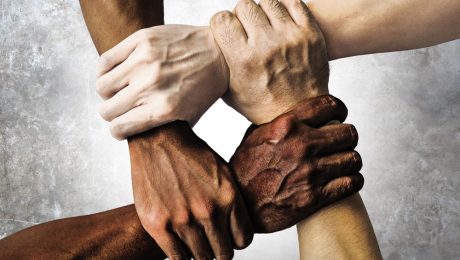
Finally, we all want the same things in life. We all want to be understood, loved and accepted. Don’t let language, religion, politics or nationality separate us. We are all part of one planet, one race, the HUMAN RACE.
Please give those you love a hug (we all need it) and I look forward to meeting you one day.

An audience decides whether to trust you before you finish your first sentence, and most of that decision has nothing to do with your words. As an acting and public speaking coach who has worked with executives, actors, and leaders in over 26 countries, Bernard Hiller sees the same body language mistakes sabotage otherwise strong speeches again and again. The good news is that every one of them is fixable, once you know what to look for.
Here are the five most common ones, and how to correct them using the same techniques actors use to command a stage.
Mistake #1: The Fortress Stance
Crossing your arms, clasping your hands in front of your body like a shield, or angling yourself away from the audience all read as defensive, even when you don’t feel defensive at all. The audience doesn’t know what’s happening inside you. They only see what your body is telling them, and a closed posture tells them to keep their distance.
- The fix: let your arms hang naturally at your sides between gestures. It will feel exposed at first. That openness is exactly what reads as confidence to a room.
Mistake #2: Nervous Static
Clicking a pen, touching your face, adjusting your clothing, jingling change in your pocket. These small, repetitive movements are what Bernard calls nervous static, and they quietly drain the authority out of an otherwise strong speech. The audience’s eyes get pulled to the movement instead of your message.
- The fix: do a physical check before you speak. Empty your pockets, set down anything you might fidget with, and give your hands a job through purposeful gestures instead.
Mistake #3: The Eye-Contact Scan
Sweeping your gaze across the room without ever landing on a real person feels like connection, but it isn’t. It reads as performance rather than presence, and audiences can feel the difference instantly, even if they can’t name why the speech felt hollow.
- The fix: hold eye contact with one person for the length of a full thought, then move to someone new. This single shift is one of the fastest ways to make a room feel like you’re speaking directly to them.
Mistake #4: Dead Hands
Hands jammed in pockets, glued to a podium, or hanging perfectly still the entire speech all send the same message: something is being held back. Actors are trained to use the whole body to tell a story, and a speech is no different. Gestures aren’t decoration. They’re part of how meaning actually lands.
- The fix: let a gesture rise naturally out of what you’re saying instead of planning it. A gesture that matches your words in real time will always read as more truthful than a rehearsed one.
Mistake #5: Movement Without Meaning
Pacing back and forth, rocking heel to toe, or swaying side to side without any connection to what you’re saying creates a kind of visual noise that competes with your message instead of supporting it.
- The fix: plant your feet and move with intention. If you take a step, take it to make a point, then land and stay grounded until the next one is worth making.
Why This Actually Matters
Body language isn’t a footnote to public speaking. It’s one of the primary ways an audience decides whether to believe you. Toastmasters International has covered this extensively, noting that a speaker’s gestures and posture are often what move an audience from indifference to genuine engagement.
None of these five mistakes are permanent. They’re habits, and habits can be retrained the same way an actor retrains physical instincts for a role. That’s the work Bernard Hiller does with every client, whether they’re stepping onto a stage, into a boardroom, or in front of a camera for the first time.
Ready to find out what your body is really saying when you speak? Visit bernardhiller.com to learn more about coaching with Bernard Hiller.